In 40 seconds
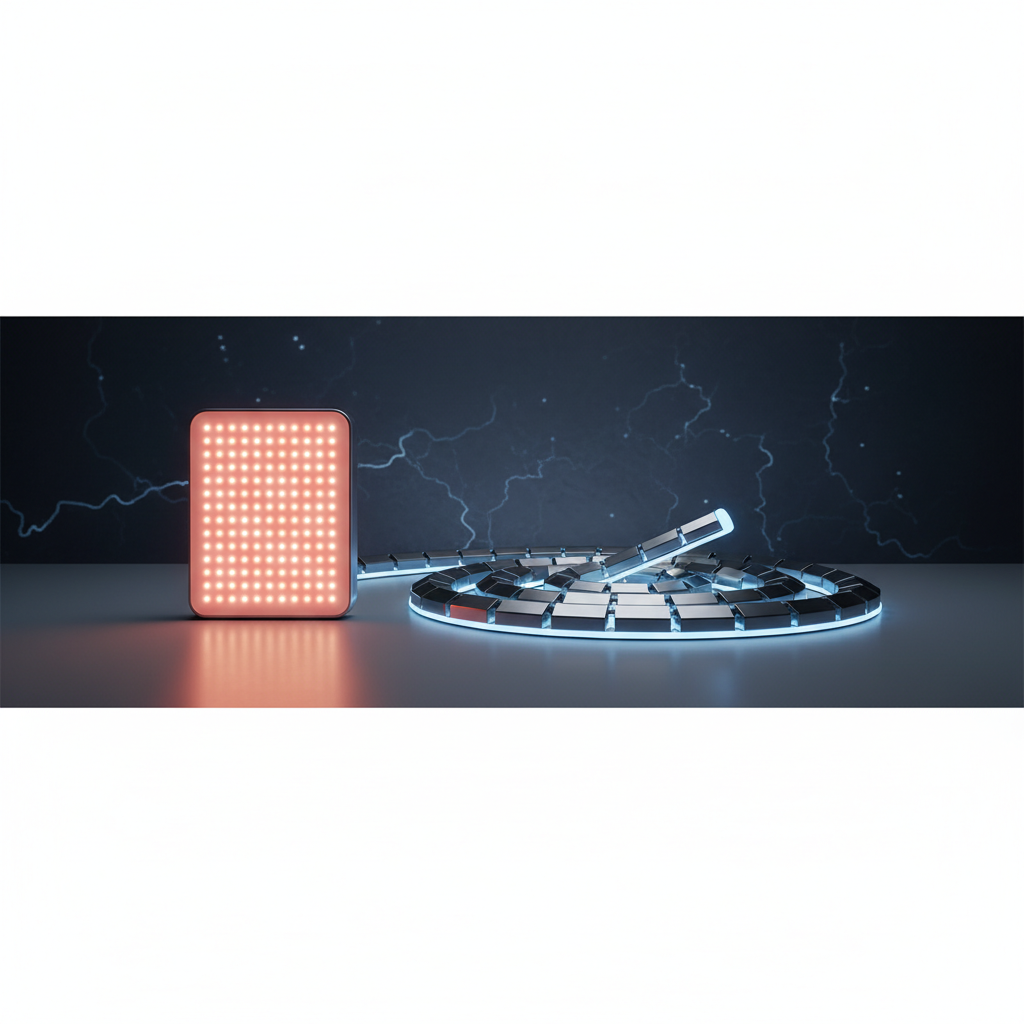
PEMF and red light therapy are different tools that stack well. PEMF uses pulsed magnetic fields that reach the entire body and work on cellular voltage and inflammation. Red light therapy (also called photobiomodulation or low-level light therapy) uses specific wavelengths of red and near-infrared light to optimise mitochondrial function in skin and shallow tissues. Many UK clinics now offer both as a recovery stack: PEMF first (40 min) for whole-body cellular recharge, then red light (15 min) for surface and mitochondrial support.
| PEMF | Red light therapy | |
|---|---|---|
| What it uses | Pulsed magnetic fields | Red + near-infrared light photons |
| Penetration | Whole body, deep tissue | Skin to 1–5cm |
| Primary effect | Cellular voltage, inflammation, ATP | Mitochondrial efficiency, skin, collagen |
| Sensation | Usually none | Warm, comfortable |
| Best for | Chronic pain, deep joints, recovery | Skin, surface joints, hair, mood, sleep |
| Session length | 30–60 min | 10–20 min |
| Stacks well together | Yes — see protocol below | Yes |
The combined recovery stack
- 1. PEMF (40 min) — full-body mat, low-frequency, reduces inflammation and recharges cells
- 2. Red light (15 min) — direct exposure to areas of interest (joint, skin, face) for mitochondrial support
- 3. (Optional) Sports massage — for muscle release
Frequently asked questions
What's the difference between PEMF and red light therapy?
PEMF uses pulsed magnetic fields that pass through the entire body, working on cellular voltage and inflammation. Red light therapy uses red and near-infrared light photons that penetrate skin to depths of 1–5cm, working on mitochondrial efficiency. Different mechanisms, different depth, complementary effects.
Should I use both?
Many do. PEMF (40 min) followed by red light (15 min) is a common stack. PEMF reduces inflammation and recharges cells; red light provides photonic energy to mitochondria. The combination compounds.
Which works faster?
Red light often produces faster surface effects — skin, surface joints, mood. PEMF works deeper and produces more systemic effects but takes a few sessions to feel.
Which is better for joint pain?
PEMF reaches deep joints (hip, lumbar spine) that red light cannot. For surface joints (knee, shoulder, hand) both work well — red light is faster, PEMF more thorough.
Are home devices any good for either?
Red light home panels (Hooga, Mito Red, Bon Charge) deliver clinical-equivalent doses for £200–£800. Home PEMF varies — clinical-grade home systems exist but are £1,500–£3,000+; cheap mats often don't deliver enough field strength to be effective.
Looking for a PEMF clinic near you?
We list every credible PEMF therapy provider in the UK so you can find one near home.